
Impressions of Mongolia
On the last grand adventure in the desert, a drizzle of rain sprinkles the dirt, a counter rhythm to the music of the wind.
I can’t yet speak of the day, as it has yet to unfold—only that the center lodge, where we meet from our separate yurts or gers, is busy making breakfast. I have a cup of coffee with warmed milk to accompany me as I ponder my impressions.
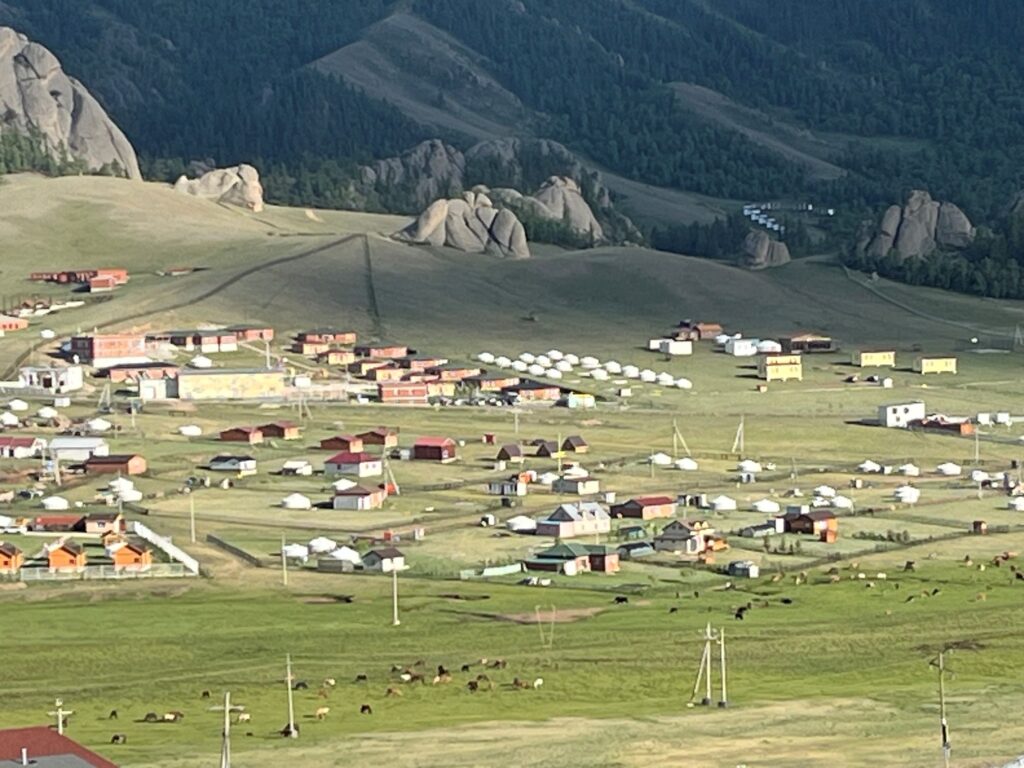
My ger has quickly become my home. A circular flat, T-pee structure, wrapped in felt, accommodates life.
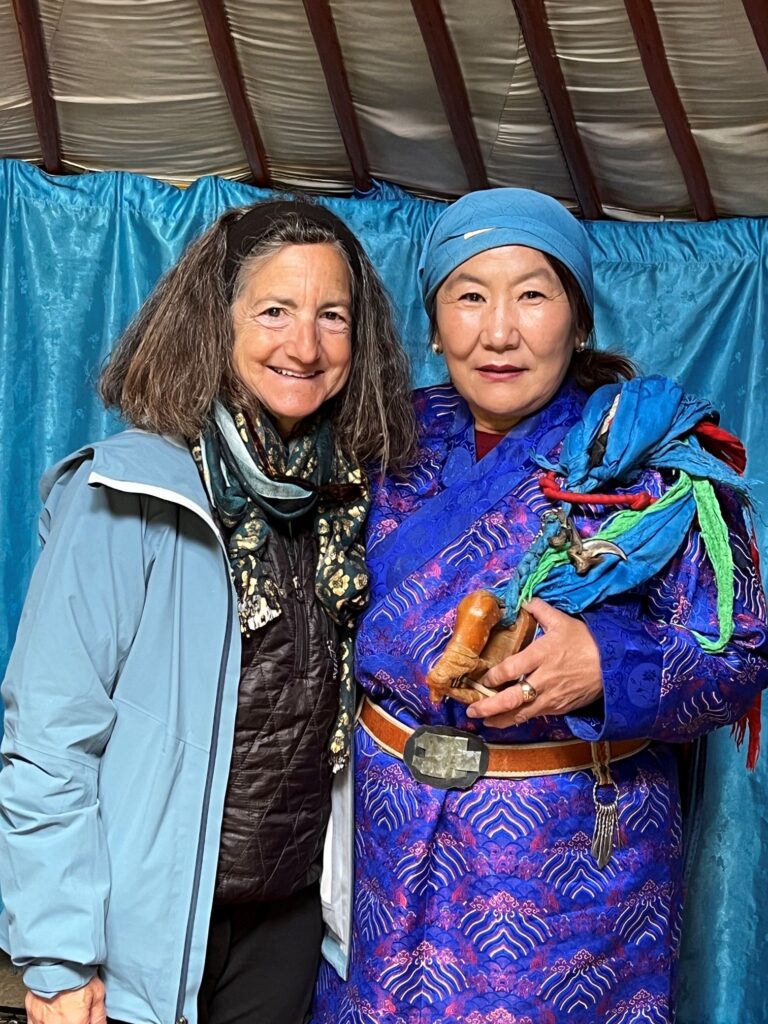
I close my eyes and the Shamon appears. Her face slightly aged, soft cream-like skin, and beautiful eyes, barely tells her story. Once a teacher of kindergarten, she accepted the role of Shamon as it was passed down from her father. To make ends meet, she runs a coffee shop, which by our standards is a small shack; a shelter welcoming the locals. Money is secondary to tradition for those more mature. The young leave with their education and the traditions are left to the elders. Educated in ways we can’t fathom, I’m overwhelmed by their knowledge of life and survival.
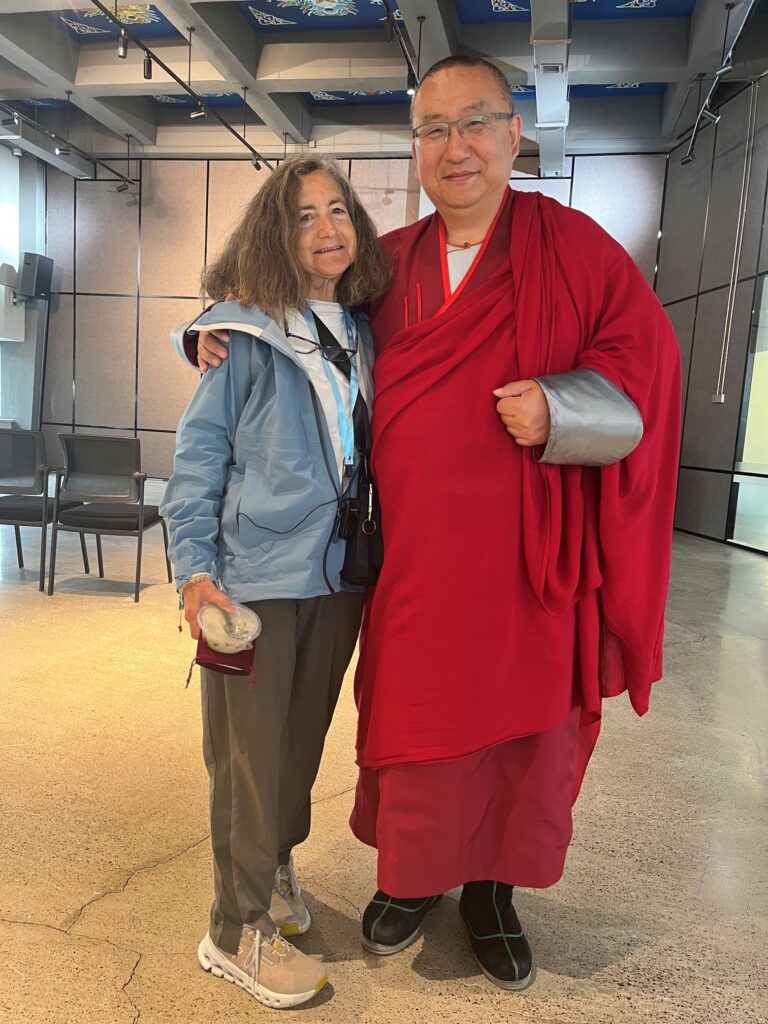
Buddhism prevails as the main religion. Going to various monasteries and meeting monks, I realize that not all monks are equal. By this I mean some have the heart and mind to blend all worlds and not only reach inward seeking their personal advancement toward nirvana, but are able to connect to communities and aid the people directly in their present lives. One monk we visited has a master’s degree from the University of Washington in project management. Humbly dressed in weathered red cloth, with a quick smile, he is merging contemporary life with Buddhist teachings, reaching the younger generation. His degree allowed him to build a modern building on traditional lands alongside the yurts of long ago.
Located in what is now the center of the city, the space is both museum and a gathering spot where monks offer chants and the young visit over coffee. This space creates a nurturing environment where the past and the present exist with a sense of humor. As a project manager and a monk, he leads a simple life on a mission to unravel the complexities of the present destructive path of politics and loss of culture .
I was struck by the monk’s insistence on leading a meditative practice of beading. The beaded bracelet exercise appeared simple but brought me to tears. A child could have created my bracelet with better acuity, because I found my fingers, which had lost their sensitivity, fumbled and my eyes struggled with the small hole to be threaded. I heard the monk’s voice and felt his hand rest on my shoulder. “No worries, take your time, follow the order to string the beads, tie the knots like this.” He stayed by my side as I fumbled my way through. Emotionally, I recognized all the losses I had incurred and saw the loss of touch and vision as symbolic of all the losses the group as whole endured through their lives and the harsh life of the Mongolians. My bracelet is beautiful in simplicity. It now rests on the neck of a wooden buddha by my door. Holy, the bracelet reminds me that there is no worshiping, only intention.
Mongolia is sandwiched between the old and new, land locked in history by two powerful countries. Russia above, China below, it struggles to modernize and remain the same. The country is a mediation on balance. Russia, an old enemy of socialism, destroyer of will, provides a huge percentage of resources. China, an old enemy, would swallow it whole if it could, provides much of Mongolia’s roads and infrastructure. Money is their currency. Because of these pulls, the country must thread the needle carefully. To combat this, they are trying to enlarge the hole by seeking more democratic partners, such as Japan, India, and the United States, being careful not to upset Father Russia, and Mother China.
I marvel at the youth who study, pushed and aided by their families, to master English, which is now taught in school, on top of their native language, as well as Russian and Korean. Their desire is for their children to become experts in their field of choice, knowing that the highly educated most likely won’t return to the traditional ways of living in the gers and maintaining the old ways.
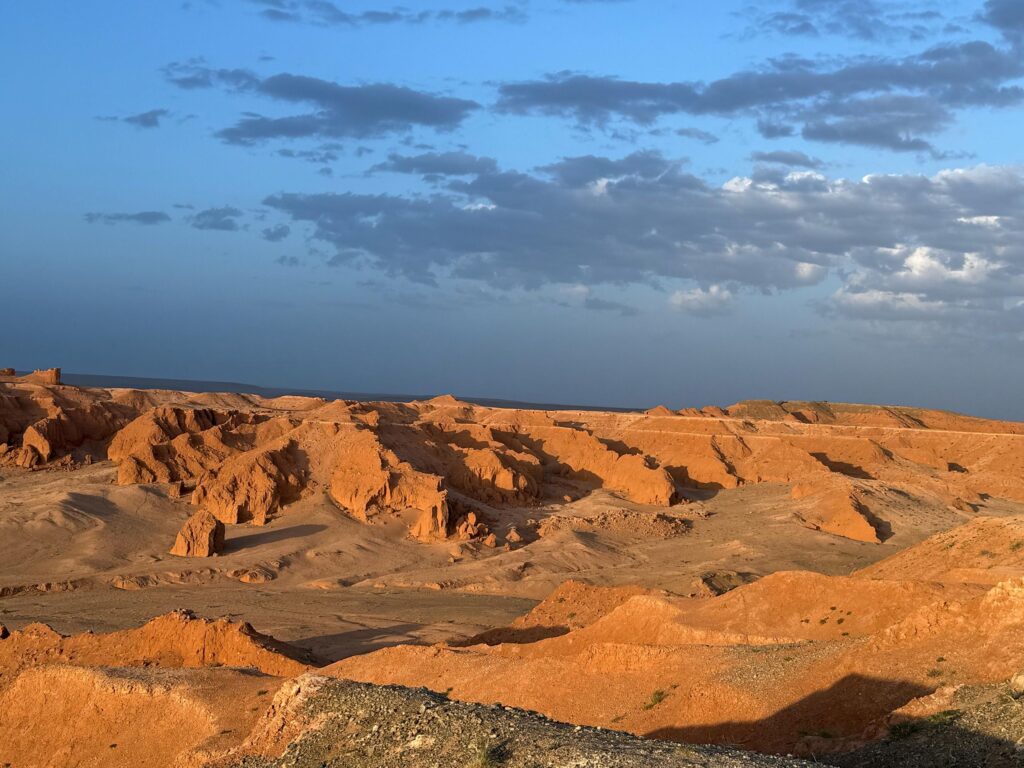
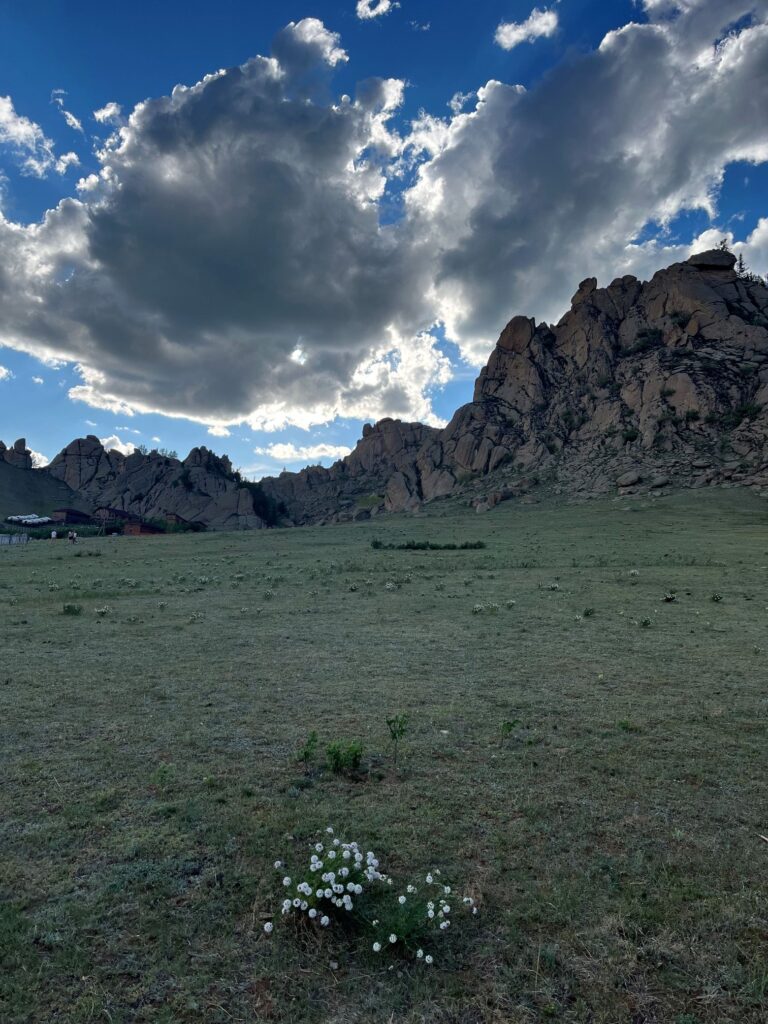
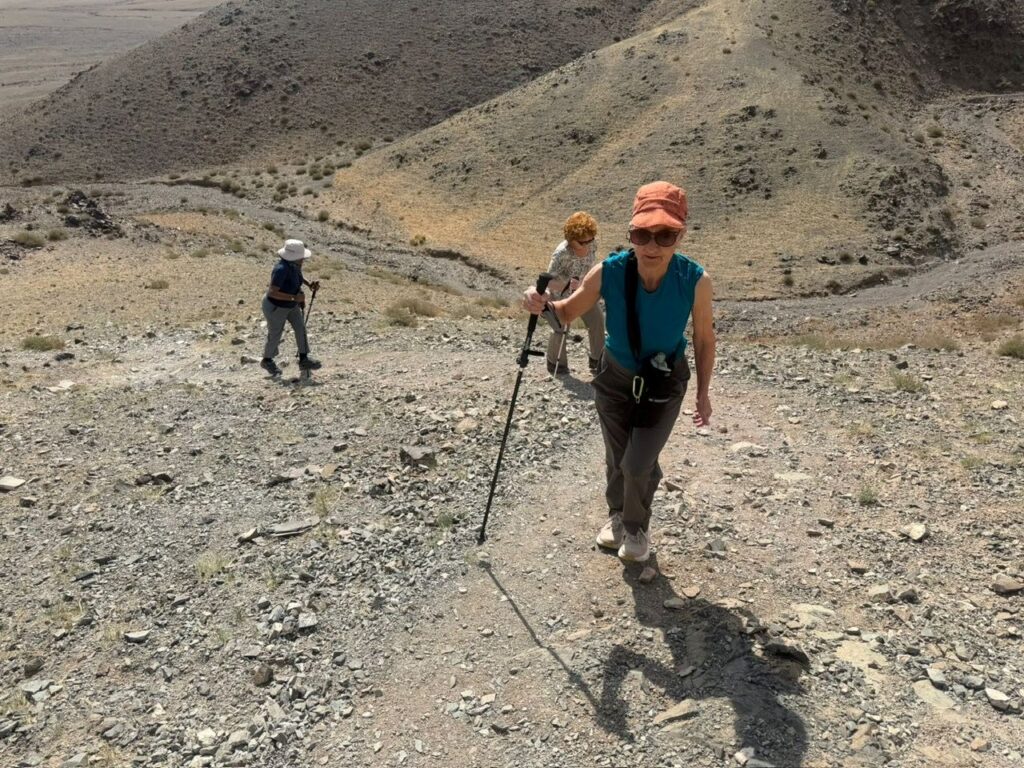
Mongolia is a harsh and vast country, with extremes in weather and geography. Even in the summer, rain and wind make its appearance. No exactitude exists. A June rain burst in the Gobi Desert, heightens my experience of camel riding, and for the nomadic villages offers water to a needed area. Once leaving the main city of Ulaanbaatar or the smaller towns, there are no roads, only vast stretches of rutted dirt expanses. Each car takes the dusty tundra in the direction of nomadic villages.
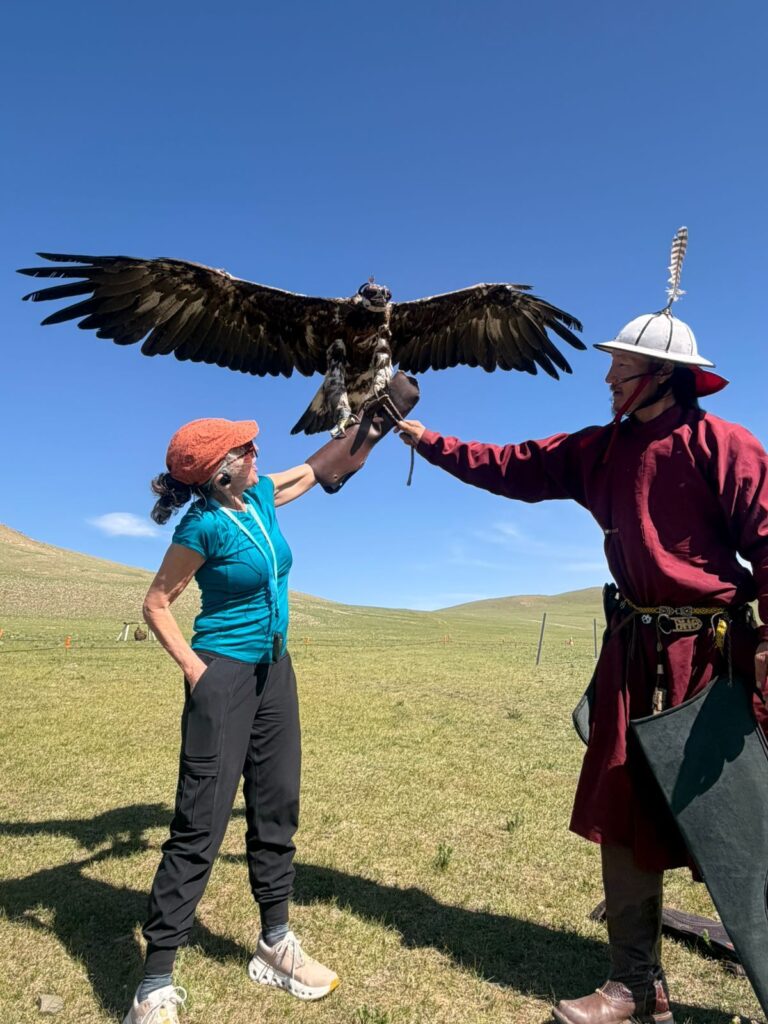
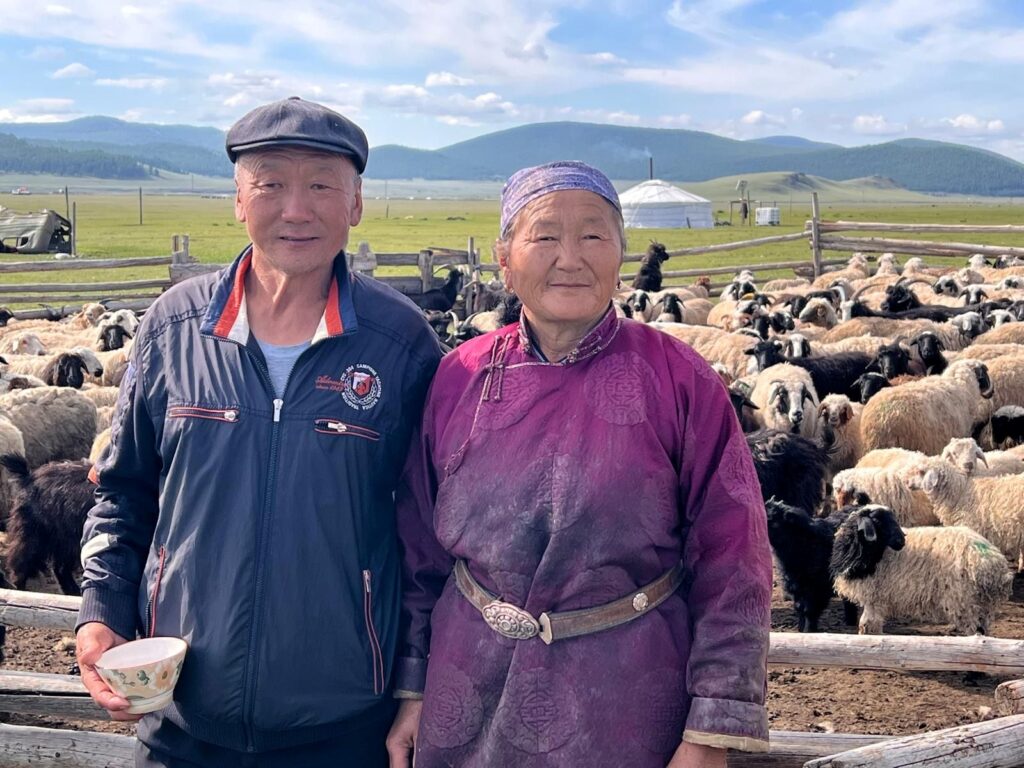
A few gers surrounded by herds of sheep, or goats, as well as yaks, or horses, or camels, even reindeer, depending on the area, forms the daily routines of the people. Milking twice daily, pasteurizing, making butter, yogurt, and cream. Other chores filled their time: Cleaning out the dung, saved for fires, brushing the animals and gathering their hair. Casmere from the goats, wool from the sheep, harsher hairs from manes and tails, and the actual strands covering the yak and camel, were combed or trimmed to weave into rope. Castration, feeding, and eventually killing the animals took all day. Nothing went to waste as witnessed using the ankle bones of the goat for the knuckle games and flicking competitions. Reindeer antlers made into bows since the time of the wars. Archery is a skill needed as well as falconry. Masters of horses, their skills came from the time of Genghis Khan.
I learned one of their ancient practices of taking sheep wool and wetting the fine fluff, folding and wetting again and then pressing into a flat shape until felt formed. The felt wrapped around the ger, for insulation; one panel around in the summer, four panels in the winter.
Harsh environments teach care and concern for without these, the animals would perish and the Mongolians wouldn’t survive nature. What is freedom without care and concern? Their life gives lessons in resilience and trust.
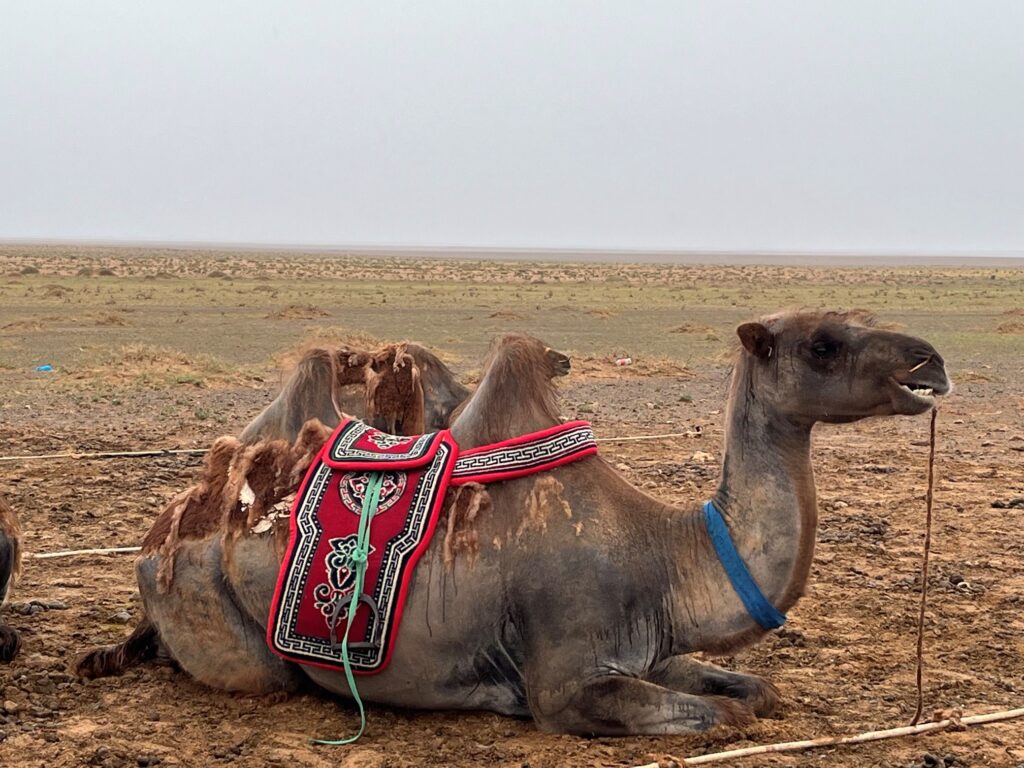
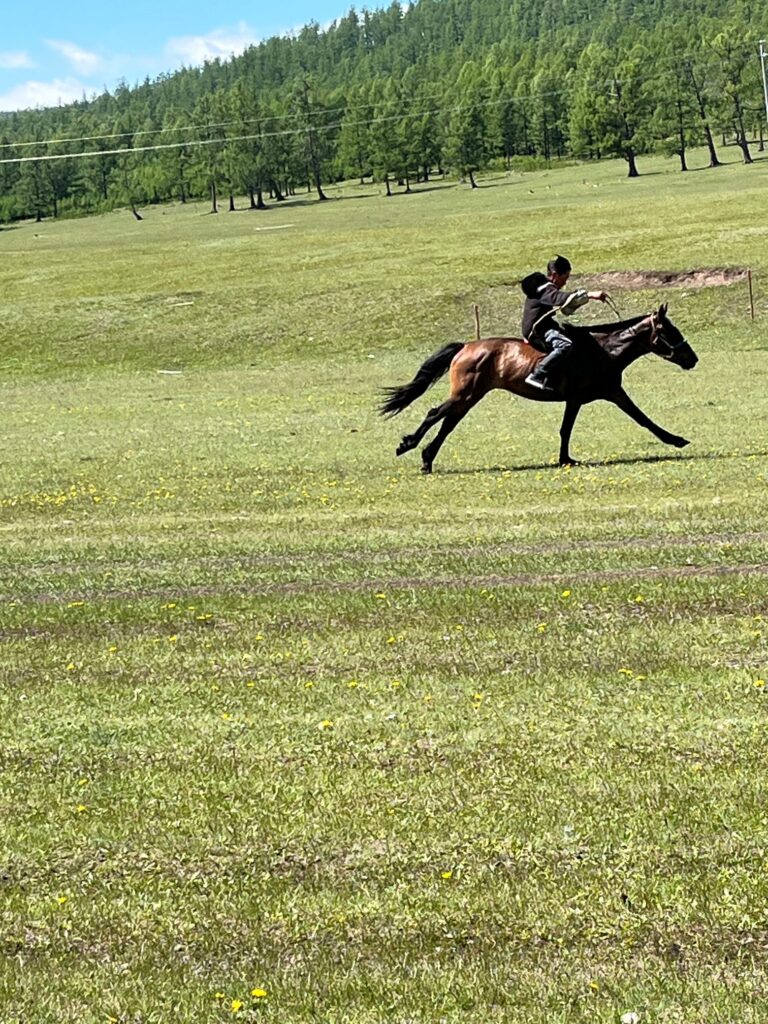
In Mongolia, I held out my arm for a Golden Eagle, a regal bird of prey, I rode a short stout horse, nuzzled in between the two humps of the camel, milked a yak, and helped make cream and felt. While the Shaman and the monk held my spiritual being, it is the nomads that maintain Mongolian culture and ways, who stay with me. Thank you.
I’d love to hear your thoughts. I’m at https://www.abberolnick.com

THANK YOU, ABBE… for “taking us along with you”, in a small way, by telling us of your marveling at Mongolia, and sharing a few images. Imagine that THAT place exists at the same time as THIS place. Thanks for the inspiration.
Yes, exactly what I felt at the time!!!!